


Category: News

Key digital and technological trends

In 2026, several key digital and technological trends are expected to shape industries and society.

For many organisations, 2026 represents the tipping point where automation, intelligent CX, and data-driven prediction move from innovation to necessity.

Those who adopt early will unlock efficiency, create competitive advantage, and build digital experiences that feel effortless, intuitive, and truly human.

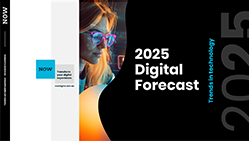
Continue reading or download a PDF version with extra inclusions. You can also view the 2025 Digital Forecast.


Hyper-personalisation powered by generative AI
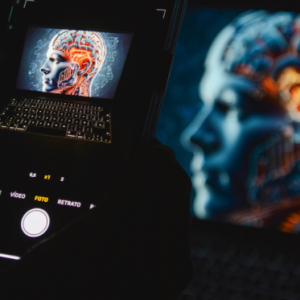
hyper-personalisation
 

In 2026, hyper-personalisation will be powered by generative AI that understands you in real time. Every interaction, behaviour, preference, and context shapes experiences that adapt instantly. Content, offers, services, and interfaces will be generated uniquely for each person when they need it. This marks a shift from mass digital experiences to true one-to-one engagement at scale. Customers will expect brands, governments and service providers to know who they are and personalise interactions without friction. For organisations to take advantage, they will need clean data, ethical governance, real-time integration, and to develop trust by design.

Impact

  • One-to-one digital experiences at scale
  • Real-time decisioning across the full journey
  • Stronger trust through ethical personalisation
  • New operational models for marketing, CX, and service

AI search overtakes traditional search completely
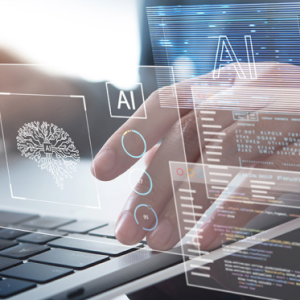
ai-search
 

In 2026, AI-powered conversational search will become the dominant interface for discovery. Instead of typing keywords into a search bar, users ask full questions, describe intent, upload images, or speak naturally and receive complete, context-aware answers instantly. Search shifts from finding links to delivering outcomes. AI search engines and embedded assistants will summarise content and recommend actions for users. Organisations that optimise for AI-driven discovery, structured data, and conversational retrieval will become the new digital front door.

Impact

  • Traditional SEO gives way to AI discovery optimisation
  • Websites shift from destinations to data sources
  • Accelerated customer journeys
  • Loss of visibility for unprepared organisations
  • New compliance, trust, and accuracy requirements

Autonomous commerce – From shopping journeys to self-running purchases
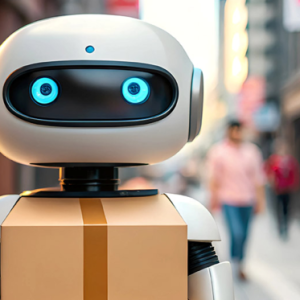
autonomous-commerce
 

Commerce shifts from guided shopping journeys to self-running purchases, where AI systems predict needs, compare options and execute transactions automatically, with human approval. In 2026, customers set preferences, budgets, and rules, and intelligent systems handle the rest. This redefines the relationship between consumers and brands. Loyalty is gained by which platforms and providers integrate most seamlessly into a customer’s autonomous purchasing ecosystem. Trust shifts to the machine that buys on the customer’s behalf.

Impact

  • The move to a single automated decision loop
  • Platforms and data integrations become more valuable than branding
  • Loyalty and competition become algorithmic
  • Operational gains and margin pressure simultaneously increase

The emotional layer becomes a mandatory UX standard

emotional-layer
 

User experience is judged on how it makes people feel. In 2026, the emotional layer becomes a mandatory UX standard, with digital experiences expected to recognise emotional context, adapt tone and interaction style, and respond with empathy. Interfaces evolve to sense frustration, confusion, urgency, or confidence through behavioural signals, language, pace, and cues, then adjust in real time. As AI becomes the first point of contact across service, commerce, healthcare, and government, emotionally unaware digital experiences will feel cold, transactional, and untrustworthy. Organisations that fail to embed emotional intelligence into their UX will struggle with engagement, and adoption.

Impact

  • Emotion-aware interfaces become a competitive differentiator
  • New expectations for service quality
  • Stronger inclusion and accessibility outcomes
  • Tighter governance around emotional data

Predictive everything: Pre-emptive CX becomes the norm

predictive-everything
 

In 2026, customer experience is predictive, preventative, and pre-emptive. AI continuously analyses behaviour, context, history, and signals across every touchpoint to anticipate needs and intervene at the right time. CX shifts to preventing problems from occurring. For organisations, this marks the end of static journeys and segmented interactions. Every customer, citizen, and member now moves through dynamic and adaptive journeys that change in real time. Organisations that master predictive CX will feel effortless to engage with; those that don’t will feel slow, repetitive, and disconnected.

Impact

  • Issues are resolved before customers are aware of them
  • Friction is eliminated across the entire digital journey
  • Conversion, retention, and loyalty increase simultaneously
  • Service demand and cost-to-serve decrease materially
  • CX performance becomes a real-time competitive weapon

Human + AI reasoning hubs replace old operating models

human-ai
 

In 2026, traditional operating models built around hierarchy, linear workflows, and static approvals give way to human + AI reasoning hubs. These hubs combine AI’s ability to analyse vast data sets, simulate outcomes, and surface insights, with human judgment, ethics, creativity, and accountability. Decisions will be continuously refined in real time. Instead of relying on slow reporting cycles and opinion-driven decisions, leaders operate in live environments where evidence, prediction, and human oversight converge.

Impact

  • Decisions shift from opinion-led to evidence-led
  • Strategy, service, and operations move in real time
  • Risk is surfaced earlier and managed faster
  • Human judgment is strengthened, not replaced
  • Organisational agility increases across all functions

Digital twins for people, not just systems

digital-twins
 

In 2026, digital twins will evolve beyond infrastructure to model people: customers, employees, patients, and citizens. These human digital twins dynamically represent behaviour, preferences, needs, risks, and life context in real time. Powered by AI and continuously updated by live data, they enable organisations to simulate outcomes, personalise services, and intervene proactively at an individual level. This unlocks a new era of personalised service, care, learning, and engagement at scale. By predicting customer churn, tailoring education, financial guidance, and workforce support, digital twins for people shift organisations from reactive service delivery to anticipatory human-centred design.

Impact

  • Personalisation moves from segments to individuals
  • Proactive interventions replace reactive service models
  • Risk, well-being, and performance are predicted earlier
  • Service design becomes continuously adaptive
  • Ethics, consent, and trust become mission-critical

The rise of AI agents as the new digital workforce

rise-ai-agents
 

In 2026, AI agents move beyond tools and chatbots to become a fully embedded digital workforce. These agents plan, reason, execute multi-step tasks, integrate across systems, and operate continuously with human oversight. For organisations facing talent shortages, cost pressure, and rising service expectations, AI agents redefine productivity at scale. Entire functions now operate as hybrid workforces, with human teams focusing on strategy, ethics, and creativity, while agents handle execution at machine speed.

Impact

  • Productivity scales without proportional headcount growth
  • Operational costs reduce across core service functions
  • 24/7 execution becomes the default operating state
  • Human roles shift toward strategy, creativity, and oversight
  • Workforce design becomes a board-level digital priority
Download the 2026 Digital Forecast Report (PDF, 2.87mb)


Stay updated with the latest digital insights and trends by subscribing to our email newsletter.

Streamline procurement and foster innovation

DTA

NOW Digital is proud to announce its appointment to the Digital Marketplace Panel by the Australian Government’s Digital Transformation Agency (DTA). This prestigious recognition places NOW Digital among a select group of digital and ICT service providers trusted to support the government’s digital transformation initiatives.

The panel is designed to streamline procurement and foster innovation, transparency, and diversity in government digital services. With over 1,300 suppliers onboarded, NOW Digital joins a vibrant ecosystem committed to delivering impactful, user-focused digital solutions for Australians.

Digital support services

We’re proud to welcome Sustainability Victoria to the NOW Digital government client portfolio.  As part of their commitment to driving climate resilience and a circular economy across the state, we’ll be supporting several of their digital assets with ongoing optimisation and digital support services.  Sustainability Victoria empowers communities, businesses, and government to take meaningful climate action – from waste reduction and resource recovery to energy efficiency and sustainable living. We’re excited to help amplify their impact through smarter, more engaging digital experiences.

AI agents

ai-agents

Agentic AI is reshaping how businesses operate by moving beyond static automations toward intelligent, autonomous systems. Unlike traditional workflows or rule-based automations, agentic AI systems—also known as AI agents—can reason, plan, adapt, and act independently in pursuit of a goal. Think of them as digital employees that not only follow instructions but make decisions, remember context, and adjust based on new information.


Agentic AI as the fusion of large language models (the ‘brain’), memory (to retain context), and tools (to interact with APIs, data, and external systems). These agents can handle dynamic, unpredictable tasks, making them ideal for transforming complex business processes.


There are different levels of agentic AI, from single agents performing simple tasks to multi-agent systems that mirror teams, where one agent coordinates others. However, building effective agents requires care: well-designed guardrails, risk assessments, and a focus on simplicity are essential to prevent errors and ensure safety.


Ultimately, agentic AI represents a significant step forward in digital transformation. While automation handles predictable tasks, businesses that embrace agentic AI will unlock new efficiencies, smarter workflows, and more adaptive systems.

Trends in technology

In 2025, several key digital and technological trends are expected to shape industries and society.

You may find opportunities in leveraging AI for automation, building XR experiences, or addressing new regulatory compliance needs.

Staying ahead of these trends can help position your organisation strategically in this evolving landscape.

Continue reading or download a PDF version with extra inclusions. You can also view the 2026 Digital Forecast for the latest trends in technology.


From assistants to augmentation with AI

assistants-to-ai
 

Artificial intelligence (AI) has evolved from a science fiction concept into an essential part of everyday life. By 2025, AI will move beyond basic automation, becoming deeply integrated into our routines. At its core, AI focuses on developing computer systems capable of performing tasks once thought to require human intelligence. We can expect advanced personal AI assistants that anticipate our needs and simplify daily tasks. Similarly, customer service will be revolutionised, with AI-driven chatbots offering personalised and efficient support that rivals human interaction.

Impact

  • AI will automate repetitive organisational tasks
  • Decisions and processes will be optimised
  • CX interactions will be personalised

Flexibility and collaboration will be embraced in workplaces

flexibility-collaboration
 

The COVID-19 pandemic has profoundly changed how we work. By 2025, remote and hybrid work models are expected to dominate. Technology will be essential for enabling collaboration and communication among teams spread across different locations. Furthermore, automation will keep reshaping the job market, driving the demand for new skills and emphasising the importance of lifelong learning.

Impact

  • Work-life balance will be flexible with remote and hybrid work models
  • Maintaining a strong culture in companies is essential

Intent-driven consumer technology

intent-driven
 

Consumer technology will focus on understanding and responding to user intent rather than merely reacting to inputs. AI and machine learning advances will allow systems to anticipate needs, provide hyper-relevant recommendations, and make proactive suggestions. Intent-driven technology will integrate across devices. Interactions will become deeply personalised, from voice assistants that act as genuine personal agents to e-commerce platforms that predict shopping preferences. Businesses that adopt intent-driven technology will gain a competitive edge, improving customer satisfaction and loyalty.

Impact

  • There will be a race to deliver hyper-targeted content and services
  • Intent-driven systems will provide cohesive experiences across multiple devices and platforms
  • Robust policies will be needed to address privacy concerns while leveraging intent data

The way we are searching is changing

search-changing
 

Search behaviour is evolving rapidly, driven by the rise of AI-powered search, voice assistants, and visual search technologies. Consumers will expect search experiences to be intuitive, conversational, and highly contextual. Traditional keyword-based search gives way to queries in everyday human language and image-based searches, where users can find what they need simply by describing or showing it. AI advancements are also enabling predictive and intent-based results, where systems deliver answers before the user even asks the question.

Impact

  • Search will understand complex queries via natural language processing
  • Images and voice will be used for search, creating new optimisation challenges for businesses
  • AI-driven tools will pre-emptively provide results, reshaping how we interact with search

Hyper-personalisation and the era of ‘me’ experiences

hyper-personalisation
 

Hyper-personalisation will redefine how businesses interact with their customers. Companies can deliver tailored experiences beyond demographics to consider individual preferences, behaviours, and real-time contexts using advanced data analytics, AI, and machine learning. From custom product recommendations to personalised marketing messages, hyper-personalisation fosters deeper connections between brands and their audiences. This trend extends to industries like healthcare, where treatments can be tailored to a patient’s genetic profile, or retail, where dynamic pricing and promotions adjust to individual shopping habits.

Impact

  • Tailored content, personalised recommendations and individualised experiences
  • Adapt in real-time to what users should be doing
  • Gain a competitive advantage as true customer-first innovators

Voice and conversational AI will dominate

voice-conversational-ai
 

Voice and conversational AI will dominate how people interact with technology, shaping the future of communication, commerce, and customer service. These systems are becoming more intuitive, allowing users to engage in natural, human-like conversations with devices, apps, and services. Voice interfaces will expand beyond smart speakers and phones, integrating into cars, wearables, and even public spaces. This shift will transform industries, enabling personalised and proactive interactions that align with user preferences and needs.

Impact

  • Engage naturally to reduce interface complexity and lengthy learning curves
  • Streamline support with instant, personalised responses
  • Deliver quick, intuitive access to information, services, and support

You need proactive and predictive CX

proactive-cx
 

Customer experience (CX) will be defined by businesses’ ability to anticipate and address customer needs before they even arise. Proactive CX uses advanced analytics and AI to identify potential issues and opportunities, ensuring seamless interactions at every touchpoint. Predictive CX takes this further, leveraging data to foresee customer behaviours and preferences, allowing for hyper-personalised solutions and offers. Together, these approaches reduce friction, enhance satisfaction, and increase loyalty by making customers feel understood and valued, setting a new standard for excellence.

Impact

  • Enhanced customer satisfaction, loyalty, and retention
  • Insights to optimise resource and budget allocations

Tap into AI-powered emotional intelligence

ai-emotional
 

AI-powered emotional intelligence (EI) will redefine human-machine interactions, enabling technology to recognise, interpret, and respond to human emotions. By analysing voice tone, facial expressions, and text sentiment, emotionally intelligent AI will deliver more empathetic and tailored responses. This capability transforms customer service, where AI can adapt its tone and approach based on a user’s mood, creating more satisfying and effective interactions. AI with EI also enhances employee well-being by detecting stress or disengagement and offering timely support.

Impact

  • Customer service and support will become more empathetic and adaptable
  • Ei-powered employee support systems will gain traction
  • Requirements for robust governance will tighten, to ensure transparency, consent, and trust

Human touch and critical thinking in a tech-driven world

human-touch
 

As technology evolves, critical thinking emerges as a non-negotiable skill in navigating a world flooded with information. The ability to distinguish fact from fiction, uncover biases, and assess the implications of innovations is essential for informed decision-making. Similarly, while digital tools enhance communication, they cannot replicate the depth of face-to-face human connections—prioritising meaningful, real-world relationships remains vital. Technology serves as both an enabler and a challenge at the intersection of creativity and innovation.

Impact

  • Critical thinking and human judgment are vital for nuanced, ethical decisions beyond technology’s reach
  • Human values ensure that technology is designed to solve real-world problems while prioritising empathy, inclusivity, and user well-being
  • Balanced collaboration will blend intuition with machine efficiency

Extending reality – blending the physical and digital worlds

extending-reality
 

Extended reality (XR), which includes augmented reality (AR) and virtual reality (VR), represents cutting-edge technologies that merge the physical and digital worlds. AR enhances the real world by overlaying digital content, while VR immerses users in completely virtual environments. By 2025, XR is expected to move beyond niche uses and achieve widespread adoption. Picture experiencing a live concert from home through VR or using AR overlays to access interactive training manuals in a manufacturing setting.

Impact

  • Interactive and immersive experiences that enhance decision-making
  • Build stronger emotional connections to products and services
  • Redefine how businesses attract, retain, and delight

Download the 2025 Digital Forecast Report (PDF, 1.46mb)


Stay updated with the latest digital insights and trends by subscribing to our email newsletter.

Sitecore launches Sitecore Stream, Industry’s first Intelligent Digital Experience Platform

Sitecore, a prominent player in digital experience software, has unveiled Sitecore Stream during its Sitecore Symposium, the annual conference for customers and partners. This new offering embodies significant innovation and aligns with Sitecore’s goal of creating an Intelligent Digital Experience Platform (DXP) that meets the current challenges and opportunities faced by enterprise marketing teams. Organisations are already utilising the features of Sitecore Stream within Sitecore’s composable DXP products to enhance their digital experience delivery.

Sitecore Stream utilises generative AI to streamline marketing workflows and boost productivity through orchestration, content intelligence, and automated support. It is built on Sitecore’s composable product architecture, ensuring seamless integration with a brand’s existing marketing technology stack while incorporating AI safeguards to maintain brand compliance and protect data privacy.

Key features of Sitecore Stream include:

  • Brand-aware AI: This functionality ensures that marketers’ actions, recommendations, and experiences align with the organisation’s brand identity, values, and guidelines.
  • AI-enhanced workflows: These workflows automate repetitive tasks, speeding up execution and enhancing collaboration. Tasks can include content creation, webpage development, or A/B testing calls to action, allowing marketers to maintain a productive workflow.
  • Generative copilots: These tools assist in the creation and optimisation of brand materials, briefs, content, and experiences, ensuring that marketers adhere to their brand guidelines throughout their tasks.

In summary, Sitecore Stream represents a transformative step towards an Intelligent DXP, integrating advanced AI capabilities to streamline marketing workflows and improve productivity across various brand touchpoints.

More details available at Sitecore Stream Press Release

Sitecore a Content Marketing Platform (CMP) leader – Gartner

Extract – Sitecore, a Leader in this Magic Quadrant, taps user group insights to develop capabilities, including its Content Hub, metadata to drive content reuse, and governance and distribution. Its modular content emphasis supports large enterprises seeking personalised experiences. 

Enhancements include campaign tracking, asset distribution visibility, top-performing content analysis, and a 3D and multidimensional image content hub. Its roadmap emphasises AI search-based improvements in tagging, providence and intent-based search tools.

Read the full report: Gartner Report Magic Quadrant for Content Marketing Platforms

Getting our Pickleball on!

We recently, on our monthly all-hands day, ventured out for social lunch, drinks and little sporting challenge of a Pickleball tournament.

With a great lunch supplied by FOC, and hosted by the great people at National Pickleball League, a break away from our desks was well deserved by all.

Everyone was a winner but only the team of Michael Hill (our CEO) and Bryce Gilhome (Senior developer) held the trophy at the end of the tournament.

The modern consumer: Embracing the demands of a new user

Embracing the demands of a new user


Empowered by tech, informed by culture, and flooded with choices, the modern consumer reigns supreme in today’s ever-shifting marketplace.


Demanding personalisation


Consumers are bored with one-size-fits-all delivery and seek a frictionless journey across devices and platforms, expecting AI-powered recommendations, customised interfaces and tailored experiences.


Prioritising privacy


Privacy concerns, especially the ever-growing risks involved in data breaches are creating more discerning consumers. Empowering users with greater control over their data and choosing options which prioritise transparent and ethical data use and high levels of security is a must. Users are looking toward decentralised solutions.


Going green


Sustainability has become a significant buying factor. Consumers are looking, more than ever, to reduce their impact on the environment when engaging with content and products. Companies are leveraging green UX optimising to address sustainability concerns.


Value-conscious


In the midst of cost-of-living crisis, Shiny Object Syndrome (SOS) is fading and consumers are turning to products which offer long term value for minimal cost. Price-conscious users are showing a preference towards subscription based services.


Social media fatigue


‘Traditional’ social media platforms are facing increasing scrutiny for issues such as misinformation and privacy concerns. While this is a medium which is, and will be, widely used; users are beginning to explore alternative forms of communication, looking a micro-communities and niche social media platforms which allow for more meaningful online interactions and content consumption.


No longer marionettes of marketing hype, modern consumers possess the power and informed and empowered choice. They demand personalised paths, respect for their data and products which tread lightly on the planet. Seeking experiences that work to enrich, not just entertain; connections which spark, not just scroll. Those who work to satisfy these desires, and not just trends, will hold the key to success in the consumer revolution.

Content governance

Content Governance


Great content governance is essential for a successful digital or website transformation. It ensures that your content is consistent, high-quality, and aligned with your overall business objectives. Here are the steps to establish effective content governance –


Define content governance objectives


Clearly outline the goals and objectives of your content governance strategy. Identify what you aim to achieve through governance, such as improved brand consistency, better user experience, or increased content effectiveness.


Establish a team


Form a dedicated team responsible for content governance. This team should include representatives from different departments, including content creators, editors, marketers, and IT professionals. Define roles and responsibilities for each team member.


Audit existing content


Conduct a thorough audit of your existing content. Identify outdated or irrelevant content, check for consistency in tone and style, and ensure that content aligns with your brand guidelines and business objectives.


Create content guidelines


Develop comprehensive content guidelines that cover style, tone, voice, formatting, and any other relevant elements. These guidelines should be easily accessible to all content creators and contributors. Regularly update them to reflect changes in your business or industry.


Implement a calendar


Establish a content calendar to plan and schedule content creation, publication, and updates. This helps in maintaining a consistent publishing schedule and ensures that content aligns with strategic goals.


Version control and workflow


Implement version control and a clear workflow for content creation, review, and approval. This helps prevent conflicts, ensures accountability, and maintains the integrity of your content.


Content metadata and tagging


Develop a system for content metadata and tagging. This makes it easier to categorise and search for content, ensuring that it is appropriately tagged for topics, audience, and relevance.


User feedback and analytics


Regularly collect user feedback and analyse website analytics. Use this information to make data-driven decisions about your content strategy and identify areas for improvement.


Training and onboarding


Provide training and onboarding for your content creators and contributors. Ensure that everyone understands the content guidelines, workflow processes, and tools used for content creation and management.


Regular audits and updates


Schedule regular content audits to ensure that your content remains relevant and aligned with your business goals. Update guidelines, workflows, and tools based on evolving needs and industry best practices.


Compliance and legal considerations


Ensure that your content governance strategy includes compliance with legal and regulatory requirements. This is crucial for industries where adherence to specific guidelines is mandatory.


Technology and tools


Invest in the right technology and tools to support your content governance efforts. This may include content management systems (CMS), collaboration platforms, and analytics tools.


By following these steps, you can establish a robust content governance framework that supports your digital or website transformation, ultimately leading to a more effective and cohesive online presence.

3 minutes with Nathan Billington


How did you get started in front-end development?


I was working behind a bar and following the tennis a lot at the time back in 1998 when the internet was just a baby (Netscape Navigator Gold 3.0 days). The fan websites of some of the players were, let’s say, ‘animated gif heavy’. I was sick of doing bar work and earning hardly anything and I thought to myself, ‘surely it can’t be that hard to make something better than these sites… I can do that!’.


With that I jumped into it in my spare time and ended up building one of the most popular tennis fan websites in the world at the time (even got a shout out from a player herself!).


Since then I’ve worked in all areas of web development from back-end to front-end, databases to SMS gateways. I’ve worked on plenty of fun things over the years but ended up sticking with Front-end because I found the final result much better (and less stressful). Being able to see the end product and build cool interactions and UI across multiple devices that users can see and use, is what I found more satisfying than behind the scenes work.


What does your typical day involve at NOW Digital?


Coffee. The first thing is always coffee, followed by morning pats with Frank (my pet rabbit)!

With the client service team managing the workload of the developers at the start of the week, I can work pretty much autonomously on whatever project I’m on. After a few meetings & calls early in the morning it’s then down to coding with the music cranking. I like to work on big projects end-to-end so I can get my fingers into it and see something go from design to browser (I’m an OCD pixel perfectionist).

Working from home most of the time allows me to break up my day and go to PT or a walk in the afternoon, then work later to make up for it. Social aspect of going into the office is always good, being able catch up with others to chat and have in person meetings. But I definitely like the WFH life.


Can you share any recent advancements or tools that have significantly impacted your workflow?

AI is certainly a game changer in the dev space. While a lot of developers worry ‘it will replace us’, there is nothing better than the human touch.

I’ve been coding for over 25 years and now having AI in your back pocket is a massive time saver. Not to write all the code for you, but to help with mundane tasks and basic questions. Being able to ask AI to ‘give me an array of countries and their country codes’ will take about 10 seconds compared to the 5 minutes it takes to find a list online, convert it to an array, make sure it’s current, fix any typos, etc.

Balancing digital & physical channels in the new world

I wanted to share some thoughts and articles on THE way to deliver truly seamless customer experiences – Phygital and Phygitisation1

The way we engage with customers has been upgraded with better technology and a beautifully blended approach to bringing the digital world into physical branches and stores. Consumers have adapted to and are happily buying online and picking-up in-store (BOPIS) and buying online and returning in-store (BORIS).

The data is compelling when it comes to changing consumer behaviours and interactions with digital self-service tools – 91% would use an online knowledge base, if available and tailored to their needs.2

Retail banking is explored in-depth by McKinsey, identifying the benefits and process required to accelerate digital and upgrade the physical experience – to harness the best of both digital and physical worlds.

I have detailed a few key callouts and added references to the McKinsey article below.

  • With the decline in usage of physical branches we need to ask – can digital channels replace branches as the dominant sales channel? What is the new role of the physical branch?
  • Banks that had already established momentum by building top-flight digital consumer experiences extended their lead in 2021.
  • The focus must shift to streamlining the sales journey
    • Full suite of digital-marketing capabilities to drive traffic – ‘multichannel approach is 3.2 times more effective at boosting sales’
    • Funnel optimisation to improve conversion – ‘reduce cognitive load of application, fewer screens and simple language can boost digital sales by 13 percent.’
    • Data and advanced analytics to power personalisation – ‘leverage life event triggers to realise 3.5 times more success.’

The article continues by looking at the disparity between the actual use and willingness to use:

“75 percent are willing to open a new account, 30-35 percent express actual preference to do so digitally and only 15 percent are actually opened online.”

We must embrace this difference between demand (75 percent) and action (15 percent) for digital acquisition, recreate offline journeys online and meet customers where they demand we be.


Until next time,

Tony – Head of Strategy


Article references 

  1. I am trying to coin the term Phygitisation – digitisation of physical processes and touchpoints 😉
  2. Zendesk survey

NOW Digital welcomes Arts Centre Melbourne

The NOW Digital team is delighted to welcome Arts Centre Melbourne to our client roster, initially engaging on a data analysis consultation.

The Melbourne Arts Precinct and Arts Centre Melbourne sit on a site that has been a gathering place for song, storytelling, community and culture for First Nations people for millennia.  Proudly the home of The Australian Ballet, Melbourne Symphony Orchestra, Melbourne Theatre Company and Opera Australia — and a range of other presenters who collectively bring their stages and spaces to life.

Together with their own program of performances, events and activities, they offer a diversity of audiences a distinctly multidimensional approach to participation, education and entertainment.


Local Government Procurement

Following an extensive multi-phase tendering process the NOW Digital team is delighted to announce our selection to the Local Government Procurement (LGP) services panel.

LGP is a not-for-profit organisation and a ‘prescribed entity’ by legislation, meaning that councils don’t have to go to tender for values greater than the tendering threshold – as they would normally have to.  Their goal is to share their procurement expertise with, councils, regional organisation of councils (ROCs), joint organisations (JOs), non-NSW councils, not-for-profit organisations, universities, state government agencies and departments, as well as providing rigorously screened access to proven service provision organisations.

Case Study Release – Coles Liquor

Case Study Release – Future Healthy

Case Study Release – City of Darebin

NOW Digital welcomes AEMO

The NOW Digital team is delighted to welcome the Australian Energy Market Operator (AEMO) to our energy sector client roster.

As the Australian Energy Market Operator (AEMO), AEMO is shaping a better energy future for all Australians.  AEMO’s role is to manage the electricity and gas systems and markets across Australia, helping to ensure Australians have access to affordable, secure and reliable energy.

In short, AEMO are helping keep Australia’s lights on – and its water hot – now, and in the future.

NOW Digital welcomes Equity Trustees

The NOW Digital team is delighted to welcome Equity Trustees to our burgeoning Financial Services Industry client roster.

Equity Trustees offers a diverse range of financial and fiduciary services, we help our private and corporate clients grow, manage and protect their wealth now and for generations to come.  Established in 1888, Equity Trustees was established as an independent Trustee and Executor company and has become one of Australia’s largest specialist trustee companies.


NOW Digital welcomes AHPRA

NOW Digital is delighted to welcome ARB International to our client roster.

The Australian Health Practitioner Regulation Agency (Ahpra) works with the 15 National Boards to help protect the public by regulating Australia’s registered health practitioners.  Together AHPRA and NOW Digital are developing a strategy to design and deliver the next phase of digital communication and seamless user experience to AHPRA’s direct health customers and the broader community.

NOW Digital welcomes ARB International

NOW Digital is delighted to welcome ARB International to our client roster.

The origins of ARB go back to 1975, when company founder, Tony Brown, was inspired by a 4WDing trip through the top end of Australia. Today, ARB have a vast international presence, with offices in the USA, Europe and the Middle East, and an export network that extends through more than 100 countries around the globe. Their philosophy has never wavered from its original course, to provide quality, reliability and practicality above all else.

Together ARB and NOW Digital are developing a strategy to design and deliver the next phase of digital marketing and seamless commerce experience to ARB’s global clientele.

Creating value in your digital ecosystems

According to research by Google, 85% of user journeys start on one device and finish on a different device, 87% begin the ‘buying’ journey on digital channels, 98% switch between multiple devices every day, and users average 6 touchpoints on the path to ‘purchase’.

Now more than ever, It is vital to know what experience you are delivering, where you are delivering it, and how it is being delivered.  This is where your digital ecosystem is key.

The term ‘Digital Ecosystem’ may sound like just another buzzword, but when you look deeper into what a successful digital ecosystem means for your business, the value is undeniable.


Increased sales, guaranteed ROI, open new revenue sources, reduce risks, and increase the speed of technology adoption.

A digital ecosystem is a dynamic, continually evolving integration of all of your digital channels that enables you to fuel growth by consistently adding value and removing frustrating and outdated systems and technologies, restricting your ability to deliver on the needs of your modern user.


By developing a digital ecosystem, companies can deliver value to users through new services, products, and business models.

Previously, companies would perform business functions independently and compartmentalised within organisational departments. There would be (significant) investment in new technologies and software without taking into consideration how these tools and systems would (could) be used and integrated through the rest of the organisation.

For a digital ecosystem strategy to succeed, organisation silos need to be unified, new systems and tools need to be embraced and external partners need to be utilised.


How can you integrate your tools and technologies to increase business performance, fuel growth, and deliver value through an increased flow of data and shared insights.

The importance of understanding exactly where your organisation is at today and how to optimise the tools that currently exist within your organisation should not be underestimated. Take a look at the tools and systems and the departments responsible, to understand how connections can be made to increase efficiency, effectiveness, and data sharing.

Every stakeholder needs to be accounted for when defining the ecosystem.

A well-defined digital ecosystem brings transparency, and by understanding how you are using digital, greater capabilities.


What are the benefits?

  1. Improved business processes
  2. Decrease costs and expenses
  3. Identification of new revenue sources
  4. A better experience for your users


How does this all deliver value?

Increase sales with access to data and related insights

Better communication, effective lead generation, and building innovation can be achieved by utilising data insights the exist within your digital ecosystem.

‘Guarantee’ Return on Investment

Understanding and optimising your channels and creating better touchpoints along the ‘buying’ journey. This knowledge ensures your present clear, consistent, and personalised messaging when required and reduces risk by adding data to your strategic direction.

Create new revenue sources

By being more connected with your users you can increase the perceived value of your products and services, reducing the risk in creating new (potentially non-traditional) revenue streams.

Increased speed of technology adoption

Your digital ecosystem should be designed to embrace the improved efficiency and effectiveness of new technology. If you do not embrace new technology resources your return on investment suffers.


A defined digital ecosystem is the foundation of your digital transformation and strategy to create a culture that embraces change and new technologies, it is designed to support your business growth. Understanding the structure and workings is important – but that is not enough.

You need to understand how to make your digital ecosystem succeed.


Until next time,
Tony – Lead Experience Strategist