

Category: Announcement

Key digital and technological trends

In 2026, several key digital and technological trends are expected to shape industries and society.

For many organisations, 2026 represents the tipping point where automation, intelligent CX, and data-driven prediction move from innovation to necessity.

Those who adopt early will unlock efficiency, create competitive advantage, and build digital experiences that feel effortless, intuitive, and truly human.

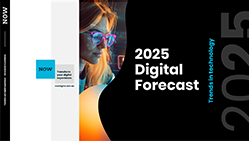
Continue reading or download a PDF version with extra inclusions. You can also view the 2025 Digital Forecast.


Hyper-personalisation powered by generative AI
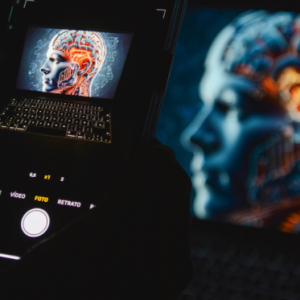
hyper-personalisation
 

In 2026, hyper-personalisation will be powered by generative AI that understands you in real time. Every interaction, behaviour, preference, and context shapes experiences that adapt instantly. Content, offers, services, and interfaces will be generated uniquely for each person when they need it. This marks a shift from mass digital experiences to true one-to-one engagement at scale. Customers will expect brands, governments and service providers to know who they are and personalise interactions without friction. For organisations to take advantage, they will need clean data, ethical governance, real-time integration, and to develop trust by design.

Impact

  • One-to-one digital experiences at scale
  • Real-time decisioning across the full journey
  • Stronger trust through ethical personalisation
  • New operational models for marketing, CX, and service

AI search overtakes traditional search completely
ai-search
 

In 2026, AI-powered conversational search will become the dominant interface for discovery. Instead of typing keywords into a search bar, users ask full questions, describe intent, upload images, or speak naturally and receive complete, context-aware answers instantly. Search shifts from finding links to delivering outcomes. AI search engines and embedded assistants will summarise content and recommend actions for users. Organisations that optimise for AI-driven discovery, structured data, and conversational retrieval will become the new digital front door.

Impact

  • Traditional SEO gives way to AI discovery optimisation
  • Websites shift from destinations to data sources
  • Accelerated customer journeys
  • Loss of visibility for unprepared organisations
  • New compliance, trust, and accuracy requirements

Autonomous commerce – From shopping journeys to self-running purchases
autonomous-commerce
 

Commerce shifts from guided shopping journeys to self-running purchases, where AI systems predict needs, compare options and execute transactions automatically, with human approval. In 2026, customers set preferences, budgets, and rules, and intelligent systems handle the rest. This redefines the relationship between consumers and brands. Loyalty is gained by which platforms and providers integrate most seamlessly into a customer’s autonomous purchasing ecosystem. Trust shifts to the machine that buys on the customer’s behalf.

Impact

  • The move to a single automated decision loop
  • Platforms and data integrations become more valuable than branding
  • Loyalty and competition become algorithmic
  • Operational gains and margin pressure simultaneously increase

The emotional layer becomes a mandatory UX standard

emotional-layer
 

User experience is judged on how it makes people feel. In 2026, the emotional layer becomes a mandatory UX standard, with digital experiences expected to recognise emotional context, adapt tone and interaction style, and respond with empathy. Interfaces evolve to sense frustration, confusion, urgency, or confidence through behavioural signals, language, pace, and cues, then adjust in real time. As AI becomes the first point of contact across service, commerce, healthcare, and government, emotionally unaware digital experiences will feel cold, transactional, and untrustworthy. Organisations that fail to embed emotional intelligence into their UX will struggle with engagement, and adoption.

Impact

  • Emotion-aware interfaces become a competitive differentiator
  • New expectations for service quality
  • Stronger inclusion and accessibility outcomes
  • Tighter governance around emotional data

Predictive everything: Pre-emptive CX becomes the norm

predictive-everything
 

In 2026, customer experience is predictive, preventative, and pre-emptive. AI continuously analyses behaviour, context, history, and signals across every touchpoint to anticipate needs and intervene at the right time. CX shifts to preventing problems from occurring. For organisations, this marks the end of static journeys and segmented interactions. Every customer, citizen, and member now moves through dynamic and adaptive journeys that change in real time. Organisations that master predictive CX will feel effortless to engage with; those that don’t will feel slow, repetitive, and disconnected.

Impact

  • Issues are resolved before customers are aware of them
  • Friction is eliminated across the entire digital journey
  • Conversion, retention, and loyalty increase simultaneously
  • Service demand and cost-to-serve decrease materially
  • CX performance becomes a real-time competitive weapon

Human + AI reasoning hubs replace old operating models

human-ai
 

In 2026, traditional operating models built around hierarchy, linear workflows, and static approvals give way to human + AI reasoning hubs. These hubs combine AI’s ability to analyse vast data sets, simulate outcomes, and surface insights, with human judgment, ethics, creativity, and accountability. Decisions will be continuously refined in real time. Instead of relying on slow reporting cycles and opinion-driven decisions, leaders operate in live environments where evidence, prediction, and human oversight converge.

Impact

  • Decisions shift from opinion-led to evidence-led
  • Strategy, service, and operations move in real time
  • Risk is surfaced earlier and managed faster
  • Human judgment is strengthened, not replaced
  • Organisational agility increases across all functions

Digital twins for people, not just systems

digital-twins
 

In 2026, digital twins will evolve beyond infrastructure to model people: customers, employees, patients, and citizens. These human digital twins dynamically represent behaviour, preferences, needs, risks, and life context in real time. Powered by AI and continuously updated by live data, they enable organisations to simulate outcomes, personalise services, and intervene proactively at an individual level. This unlocks a new era of personalised service, care, learning, and engagement at scale. By predicting customer churn, tailoring education, financial guidance, and workforce support, digital twins for people shift organisations from reactive service delivery to anticipatory human-centred design.

Impact

  • Personalisation moves from segments to individuals
  • Proactive interventions replace reactive service models
  • Risk, well-being, and performance are predicted earlier
  • Service design becomes continuously adaptive
  • Ethics, consent, and trust become mission-critical

The rise of AI agents as the new digital workforce

rise-ai-agents
 

In 2026, AI agents move beyond tools and chatbots to become a fully embedded digital workforce. These agents plan, reason, execute multi-step tasks, integrate across systems, and operate continuously with human oversight. For organisations facing talent shortages, cost pressure, and rising service expectations, AI agents redefine productivity at scale. Entire functions now operate as hybrid workforces, with human teams focusing on strategy, ethics, and creativity, while agents handle execution at machine speed.

Impact

  • Productivity scales without proportional headcount growth
  • Operational costs reduce across core service functions
  • 24/7 execution becomes the default operating state
  • Human roles shift toward strategy, creativity, and oversight
  • Workforce design becomes a board-level digital priority
Download the 2026 Digital Forecast Report (PDF, 2.87mb)


Stay updated with the latest digital insights and trends by subscribing to our email newsletter.

Trends in technolgy

In 2026, several key digital and technological trends are expected to shape industries and society.

For many organisations, 2026 represents the tipping point where automation, intelligent CX, and data-driven prediction move from innovation to necessity.

Those who adopt early will unlock efficiency, create competitive advantage, and build digital experiences that feel effortless, intuitive, and truly human.

Digital forecast highlights

Hyper-personalisation will be powered by generative AI that understands you in real time. Every interaction, behaviour, preference, and context feeds experiences that adapt instantly.

Autonomous commerce sees the shift from guided journeys to self-running purchases. AI predicts needs, compares, times, and executes transactions automatically. Customers set preferences and budgets, and the system handles the rest.

AI-powered conversational search becomes the dominant interface. Instead of keywords into a search bar, users ask full questions, describe intent, upload images, or speak naturally and receive answers instantly.

Customer experience is predictive, preventative, and pre-emptive. AI continuously analyses behaviour, context, history, and signals across touchpoints to anticipate needs, remove friction before it appears, and intervene at the right time.

The emotional layer becomes a mandatory UX standard, with digital experiences expected to recognise emotional context, adapt tone and interaction style, and respond with empathy.

Operating models built around hierarchy, workflows, and static approvals give way to human + AI reasoning hubs. The power is combining AI’s ability to analyse vast data sets, simulate outcomes, and surface insights, with human judgment, ethics, creativity, and accountability.


Receive the full 2026 Digital Forecast – Trends in Technology Report in January by subscribing to our newsletter.

Subscribe now

New partnership

NOW Digital is proud to welcome the Office of the Information Commissioner Queensland (OIC) as a new digital partner. We’re thrilled to be working together to enhance their online presence and deliver a seamless user experience on the Squiz DXP platform.

Stay tuned as we help OIC empower transparency and access to information through smart, user-focused digital design.

SXSW 2025

We’re excited to share that our team will be attending SXSW Sydney (13-17 October) this year!

Representing our agency on the ground will be:

SXSW Sydney is a fantastic opportunity to connect with creative thinkers, technologists, and innovators from across the region—and we’re looking forward to catching up with partners, collaborators, and new contacts throughout the week.

We’ll also be sharing insights and takeaways from the sessions we attend, so stay tuned for updates across our channels.

If you’re attending and would like to connect, feel free to reach out—we’d love to say hello!

Streamline procurement and foster innovation

DTA

NOW Digital is proud to announce its appointment to the Digital Marketplace Panel by the Australian Government’s Digital Transformation Agency (DTA). This prestigious recognition places NOW Digital among a select group of digital and ICT service providers trusted to support the government’s digital transformation initiatives.

The panel is designed to streamline procurement and foster innovation, transparency, and diversity in government digital services. With over 1,300 suppliers onboarded, NOW Digital joins a vibrant ecosystem committed to delivering impactful, user-focused digital solutions for Australians.

Preferred digital partner

NOW Digital is proud to announce our new role as a preferred digital partner for the Tasmanian Government. This partnership reinforces our deep expertise in delivering enterprise-scale digital solutions across government and public sector organisations. With a strong track record of designing and developing accessible, user-centric platforms, we look forward to supporting Tasmania’s vision for digital services that are modern, secure, and intuitive for every citizen.

As a preferred partner on the Department of Premier & Cabinet’s Marketing & Communications Panel, we will collaborate closely with government teams to enhance digital service delivery—helping Tasmanians connect more easily with the information and services that matter most.

Digital support services

We’re proud to welcome Sustainability Victoria to the NOW Digital government client portfolio.  As part of their commitment to driving climate resilience and a circular economy across the state, we’ll be supporting several of their digital assets with ongoing optimisation and digital support services.  Sustainability Victoria empowers communities, businesses, and government to take meaningful climate action – from waste reduction and resource recovery to energy efficiency and sustainable living. We’re excited to help amplify their impact through smarter, more engaging digital experiences.

NOW Digital welcomes IVECO New Zealand

The NOW Digital team is proud to be expanding its engagement with IVECO, to include IVECO New Zealand to our Automotive Industry client roster.  As part of a continued global rollout of Sitecore DXP, NOW Digital has been selected to implement and provide ongoing support and optimisation to IVECO’s New Zealand’s websites.

IVECO is committed to developing high quality commercial vehicles that provide efficiency and productivity for their owners. From light to heavy-duty, and covering both on and off-road work, their range is one of the broadest available and includes Daily, Eurocargo, ACCO, S-WAY, T-WAY, and Astra – and are all built to handle New Zealand’s tough operating conditions and applications.

Trends in technology

In 2025, several key digital and technological trends are expected to shape industries and society.

You may find opportunities in leveraging AI for automation, building XR experiences, or addressing new regulatory compliance needs.

Staying ahead of these trends can help position your organisation strategically in this evolving landscape.

Continue reading or download a PDF version with extra inclusions. You can also view the 2026 Digital Forecast for the latest trends in technology.


From assistants to augmentation with AI

assistants-to-ai
 

Artificial intelligence (AI) has evolved from a science fiction concept into an essential part of everyday life. By 2025, AI will move beyond basic automation, becoming deeply integrated into our routines. At its core, AI focuses on developing computer systems capable of performing tasks once thought to require human intelligence. We can expect advanced personal AI assistants that anticipate our needs and simplify daily tasks. Similarly, customer service will be revolutionised, with AI-driven chatbots offering personalised and efficient support that rivals human interaction.

Impact

  • AI will automate repetitive organisational tasks
  • Decisions and processes will be optimised
  • CX interactions will be personalised

Flexibility and collaboration will be embraced in workplaces

flexibility-collaboration
 

The COVID-19 pandemic has profoundly changed how we work. By 2025, remote and hybrid work models are expected to dominate. Technology will be essential for enabling collaboration and communication among teams spread across different locations. Furthermore, automation will keep reshaping the job market, driving the demand for new skills and emphasising the importance of lifelong learning.

Impact

  • Work-life balance will be flexible with remote and hybrid work models
  • Maintaining a strong culture in companies is essential

Intent-driven consumer technology

intent-driven
 

Consumer technology will focus on understanding and responding to user intent rather than merely reacting to inputs. AI and machine learning advances will allow systems to anticipate needs, provide hyper-relevant recommendations, and make proactive suggestions. Intent-driven technology will integrate across devices. Interactions will become deeply personalised, from voice assistants that act as genuine personal agents to e-commerce platforms that predict shopping preferences. Businesses that adopt intent-driven technology will gain a competitive edge, improving customer satisfaction and loyalty.

Impact

  • There will be a race to deliver hyper-targeted content and services
  • Intent-driven systems will provide cohesive experiences across multiple devices and platforms
  • Robust policies will be needed to address privacy concerns while leveraging intent data

The way we are searching is changing

search-changing
 

Search behaviour is evolving rapidly, driven by the rise of AI-powered search, voice assistants, and visual search technologies. Consumers will expect search experiences to be intuitive, conversational, and highly contextual. Traditional keyword-based search gives way to queries in everyday human language and image-based searches, where users can find what they need simply by describing or showing it. AI advancements are also enabling predictive and intent-based results, where systems deliver answers before the user even asks the question.

Impact

  • Search will understand complex queries via natural language processing
  • Images and voice will be used for search, creating new optimisation challenges for businesses
  • AI-driven tools will pre-emptively provide results, reshaping how we interact with search

Hyper-personalisation and the era of ‘me’ experiences

hyper-personalisation
 

Hyper-personalisation will redefine how businesses interact with their customers. Companies can deliver tailored experiences beyond demographics to consider individual preferences, behaviours, and real-time contexts using advanced data analytics, AI, and machine learning. From custom product recommendations to personalised marketing messages, hyper-personalisation fosters deeper connections between brands and their audiences. This trend extends to industries like healthcare, where treatments can be tailored to a patient’s genetic profile, or retail, where dynamic pricing and promotions adjust to individual shopping habits.

Impact

  • Tailored content, personalised recommendations and individualised experiences
  • Adapt in real-time to what users should be doing
  • Gain a competitive advantage as true customer-first innovators

Voice and conversational AI will dominate

voice-conversational-ai
 

Voice and conversational AI will dominate how people interact with technology, shaping the future of communication, commerce, and customer service. These systems are becoming more intuitive, allowing users to engage in natural, human-like conversations with devices, apps, and services. Voice interfaces will expand beyond smart speakers and phones, integrating into cars, wearables, and even public spaces. This shift will transform industries, enabling personalised and proactive interactions that align with user preferences and needs.

Impact

  • Engage naturally to reduce interface complexity and lengthy learning curves
  • Streamline support with instant, personalised responses
  • Deliver quick, intuitive access to information, services, and support

You need proactive and predictive CX

proactive-cx
 

Customer experience (CX) will be defined by businesses’ ability to anticipate and address customer needs before they even arise. Proactive CX uses advanced analytics and AI to identify potential issues and opportunities, ensuring seamless interactions at every touchpoint. Predictive CX takes this further, leveraging data to foresee customer behaviours and preferences, allowing for hyper-personalised solutions and offers. Together, these approaches reduce friction, enhance satisfaction, and increase loyalty by making customers feel understood and valued, setting a new standard for excellence.

Impact

  • Enhanced customer satisfaction, loyalty, and retention
  • Insights to optimise resource and budget allocations

Tap into AI-powered emotional intelligence

ai-emotional
 

AI-powered emotional intelligence (EI) will redefine human-machine interactions, enabling technology to recognise, interpret, and respond to human emotions. By analysing voice tone, facial expressions, and text sentiment, emotionally intelligent AI will deliver more empathetic and tailored responses. This capability transforms customer service, where AI can adapt its tone and approach based on a user’s mood, creating more satisfying and effective interactions. AI with EI also enhances employee well-being by detecting stress or disengagement and offering timely support.

Impact

  • Customer service and support will become more empathetic and adaptable
  • Ei-powered employee support systems will gain traction
  • Requirements for robust governance will tighten, to ensure transparency, consent, and trust

Human touch and critical thinking in a tech-driven world

human-touch
 

As technology evolves, critical thinking emerges as a non-negotiable skill in navigating a world flooded with information. The ability to distinguish fact from fiction, uncover biases, and assess the implications of innovations is essential for informed decision-making. Similarly, while digital tools enhance communication, they cannot replicate the depth of face-to-face human connections—prioritising meaningful, real-world relationships remains vital. Technology serves as both an enabler and a challenge at the intersection of creativity and innovation.

Impact

  • Critical thinking and human judgment are vital for nuanced, ethical decisions beyond technology’s reach
  • Human values ensure that technology is designed to solve real-world problems while prioritising empathy, inclusivity, and user well-being
  • Balanced collaboration will blend intuition with machine efficiency

Extending reality – blending the physical and digital worlds

extending-reality
 

Extended reality (XR), which includes augmented reality (AR) and virtual reality (VR), represents cutting-edge technologies that merge the physical and digital worlds. AR enhances the real world by overlaying digital content, while VR immerses users in completely virtual environments. By 2025, XR is expected to move beyond niche uses and achieve widespread adoption. Picture experiencing a live concert from home through VR or using AR overlays to access interactive training manuals in a manufacturing setting.

Impact

  • Interactive and immersive experiences that enhance decision-making
  • Build stronger emotional connections to products and services
  • Redefine how businesses attract, retain, and delight

Download the 2025 Digital Forecast Report (PDF, 1.46mb)


Stay updated with the latest digital insights and trends by subscribing to our email newsletter.

Sitecore launches Sitecore Stream, Industry’s first Intelligent Digital Experience Platform

Sitecore, a prominent player in digital experience software, has unveiled Sitecore Stream during its Sitecore Symposium, the annual conference for customers and partners. This new offering embodies significant innovation and aligns with Sitecore’s goal of creating an Intelligent Digital Experience Platform (DXP) that meets the current challenges and opportunities faced by enterprise marketing teams. Organisations are already utilising the features of Sitecore Stream within Sitecore’s composable DXP products to enhance their digital experience delivery.

Sitecore Stream utilises generative AI to streamline marketing workflows and boost productivity through orchestration, content intelligence, and automated support. It is built on Sitecore’s composable product architecture, ensuring seamless integration with a brand’s existing marketing technology stack while incorporating AI safeguards to maintain brand compliance and protect data privacy.

Key features of Sitecore Stream include:

  • Brand-aware AI: This functionality ensures that marketers’ actions, recommendations, and experiences align with the organisation’s brand identity, values, and guidelines.
  • AI-enhanced workflows: These workflows automate repetitive tasks, speeding up execution and enhancing collaboration. Tasks can include content creation, webpage development, or A/B testing calls to action, allowing marketers to maintain a productive workflow.
  • Generative copilots: These tools assist in the creation and optimisation of brand materials, briefs, content, and experiences, ensuring that marketers adhere to their brand guidelines throughout their tasks.

In summary, Sitecore Stream represents a transformative step towards an Intelligent DXP, integrating advanced AI capabilities to streamline marketing workflows and improve productivity across various brand touchpoints.

More details available at Sitecore Stream Press Release

Sitecore a Content Marketing Platform (CMP) leader – Gartner

Extract – Sitecore, a Leader in this Magic Quadrant, taps user group insights to develop capabilities, including its Content Hub, metadata to drive content reuse, and governance and distribution. Its modular content emphasis supports large enterprises seeking personalised experiences. 

Enhancements include campaign tracking, asset distribution visibility, top-performing content analysis, and a 3D and multidimensional image content hub. Its roadmap emphasises AI search-based improvements in tagging, providence and intent-based search tools.

Read the full report: Gartner Report Magic Quadrant for Content Marketing Platforms

Optimizely Launches New SaaS CMS Providing Unparalleled Flexibility for Marketers

Continuing their mission to provide flexible and powerful marketing solutions, Optimizely, a leading digital experience platform (DXP) provider, today announced the launch of its SaaS CMS, featuring the all-new Visual Builder.  Building upon Optimizely’s years of category leadership, these exciting new products expand the company’s user base by offering customers and partners the power to choose between SaaS and PaaS solutions depending on their organisational and business needs.  

To learn more see the full press release.  

Optimizely a CMP leader – Gartner

Optimizely has been recently named a Leader in the Gartner Magic Quadrant for CMP. Its suite-based solution offers its pre-acquisition stand-alone CMP’s robust structured content and distribution capabilities, and strong asset visibility in its DAM and distribution through its DXP.

Optimizely’s Ideas Lab and Budgeting and Financials tab break down the cost of individual tasks. These features can be licensed as part of a broader DXP suite. Optimizely continues investing in omnichannel authoring and AI-driven semantic search, and plans to expand AI and content performance reporting and analytics capabilities.

Read the full: Gartner Report Magic Quadrant for Content Marketing Platforms

NOW Digital welcomes IVECO Australia

The NOW Digital team is delighted to welcome IVECO to our Automotive Industry client roster.  As part of a global rollout of Sitecore DXP, NOW Digital has been selected to provide ongoing Support & Optimisation to IVECO’s Australian websites.

IVECO is committed to developing high quality commercial vehicles that provide efficiency and productivity for their owners. From light to heavy-duty, and covering both on and off-road work, our range is one of the broadest available and includes Daily, Eurocargo, ACCO, S-WAY, T-WAY, and Astra – and are all built to handle Australia’s tough operating conditions and applications.

Contentful acquires Ninetailed personalisation platform

NOW Digital partner update – Contentful has recently acquired Ninetailed, a pioneer of structured content personalisation and experimentation.  Effective immediately our Contentful customers have a smoother path to personalise, optimise, and measure their digital experiences using the combined power of the Contentful Composable Content Platform and the leading AI personalization capabilities of Ninetailed.  This move combines the power of composability (which we are huge advocates of!) with an API-first architecture, generative AI, and lightning-fast delivery.

Read full announcement here.

Acquia launches Digital Experience Optimization Solution

Acquia, a leader in the open source digital experience platform space, recently announced that it is expanding its digital experience platform, Acquia DXP, with the launch of Acquia Digital Experience Optimization (DXO). The new solution makes Acquia the first of any DXP vendor to offer a complete offering to maximize content relevance, search performance, and conversions.  In addition to the previously announced Monsido acquisition offering site governance and accessibility, Acquia’s new DXO solution will include two additional products: Acquia SEO; to increase brand visibility and engagement, and Acquia Convert; to build high-performing personalized experiences across the customer journey.

For more information on DXO visit the NOW Digital Acquia page.

2025 Trend Report


In 2025, several key digital and technological trends are expected to shape industries and society.

You may find opportunities in leveraging AI for automation, building XR experiences, or addressing new regulatory compliance needs.

Staying ahead of these trends can help position your organisation strategically in this evolving landscape.

Digital forecast highlights

  • AI will transcend basic automation to power advanced personal assistants, anticipating needs, simplify tasks, and revolutionise service through AI-driven chatbots on par with human interaction.
  • Intent-driven technology will prioritise understanding user intent, anticipating needs and will deliver hyper-personalised experiences, integrated across all devices, enhancing the total customer experience.
  • Search behaviour is shifting to intuitive, conversational, and contextual experiences. AI-powered search, voice assistants, and visual search technologies will deliver predictive, intent-driven results before users even ask.
  • Hyper-personalisation leverages AI and data analytics to deliver tailored experiences based on individual preferences and real-time contexts, with personalised content, dynamic pricing, and custom recommendations.
  • Voice and conversational AI will shape the future of communication, commerce, and service by enabling natural, human-like interactions. Expanding beyond smart devices, voice interfaces will integrate to deliver personalised and proactive experiences.
  • Critical thinking is essential for navigating information, uncovering biases, and making informed decisions. While digital tools enhance communication, they cannot replace the value of face-to-face human connections, highlighting the need for balance.
  • Proactive and predictive CX will set new standards by anticipating customer needs, reducing friction, and delivering hyper-personalised solutions.
  • Extended Reality (XR), including AR and VR, bridges the physical and digital worlds. XR will achieve widespread adoption, enabling immersive experiences like AR-powered interactive training and support in diverse industries.

Receive the full 2025 Digital Forecast – Trends in Technology Report in January by subscribing to our newsletter.

The key to successful project delivery

Producers at NOW Digital play a crucial role in overseeing and managing the execution of various projects. Their primary responsibility is to ensure the successful delivery of digital solutions to clients by coordinating and facilitating the work of different team within the agency. Some specific tasks and responsibilities typically associated with the role of a producer in our digital agency include:

  1. Project Management: Producers are responsible for managing the overall project lifecycle, including planning, scheduling, and resource allocation. They create project timelines, set milestones, and track progress to ensure that projects are delivered on time and within budget.
  2. Client Communication: Producers act as the main point of contact between the agency and the client. They establish and maintain strong relationships with clients, understand their requirements, and communicate project updates, progress, and deliverables effectively.
  3. Team Coordination: Producers collaborate with various teams within the agency, including designers, developers, content creators, and marketers. They ensure effective coordination between team members, assign tasks, and facilitate communication to ensure a smooth workflow and successful completion of projects.
  4. Budget and Resource Management: Producers are responsible for managing project budgets and allocating resources effectively. They track project costs, negotiate with vendors or contractors, and ensure that resources are utilised efficiently to achieve project goals.
  5. Quality Assurance: Producers ensure the quality of deliverables by setting and maintaining high standards. They conduct regular reviews, provide feedback, and ensure that projects meet the agency’s and clients’ expectations.
  6. Risk Management: Producers identify potential risks and issues that may arise during the project lifecycle and develop contingency plans to mitigate them. They proactively address challenges, resolve conflicts, and keep projects on track.
  7. Research and Innovation: Producers stay up to date with the latest digital trends, technologies, and industry best practices. They provide insights and recommendations to clients and internal teams, suggesting innovative approaches to enhance project outcomes.

Providing a best in class service for clients requires a high level of dedication, enthusiasm, knowledge and a broad set of skills from the Digital Producers – Mark Coombes, Head of Client Service

Overall, producers in our digital agency act as the driving force behind successful project execution. They combine project management skills, client relationship management, and cross-functional collaboration to ensure that projects are delivered efficiently, meet client expectations, and achieve business objectives.

NOW Digital welcomes Arts Centre Melbourne

The NOW Digital team is delighted to welcome Arts Centre Melbourne to our client roster, initially engaging on a data analysis consultation.

The Melbourne Arts Precinct and Arts Centre Melbourne sit on a site that has been a gathering place for song, storytelling, community and culture for First Nations people for millennia.  Proudly the home of The Australian Ballet, Melbourne Symphony Orchestra, Melbourne Theatre Company and Opera Australia — and a range of other presenters who collectively bring their stages and spaces to life.

Together with their own program of performances, events and activities, they offer a diversity of audiences a distinctly multidimensional approach to participation, education and entertainment.


Local Government Procurement

Following an extensive multi-phase tendering process the NOW Digital team is delighted to announce our selection to the Local Government Procurement (LGP) services panel.

LGP is a not-for-profit organisation and a ‘prescribed entity’ by legislation, meaning that councils don’t have to go to tender for values greater than the tendering threshold – as they would normally have to.  Their goal is to share their procurement expertise with, councils, regional organisation of councils (ROCs), joint organisations (JOs), non-NSW councils, not-for-profit organisations, universities, state government agencies and departments, as well as providing rigorously screened access to proven service provision organisations.

Case Study Release – Coles Liquor

Case Study Release – Future Healthy